Homeopathy Treatment for PCOS

You’ve just been diagnosed with PCOS. Perhaps you’ve suspected it for quite some time, but now you have a confirmation. But then the questions begin to rain down: “Why is my period late again? Why isn’t this jawline breakout ever going away? Why does my chin have more hair and my head less? The bottom line is that PCOS doesn’t look the same twice! One woman’s main issue is a cycle that shows up whenever it feels like it. Another is dealing with hair loss and weight gain, but her periods are fine. And it’s not just physical; irregular periods bring on real anxiety, acne chips away at confidence, and not knowing what’s “normal” for your own body anymore is genuinely exhausting.
Dr. Saba Lashkar, a homeopathic doctor in Kharghar, doesn’t just look at whichever symptom brought you in that day. She’ll ask about your cycle history, sure, but also your sleep, your stress, your family history, what else is going on in your life. PCOS rarely shows up on its own, so treating it like an isolated problem usually doesn’t get anyone very far. “Every woman experiences PCOS differently. Understanding her symptoms, her lifestyle, and her overall health is what actually shapes how we approach her care.” — Dr. Saba Lashkar

Understanding PCOS and Its Impact on Health

Polycystic ovary syndrome is a hormonal and metabolic condition, and it’s a common one. At a basic level, it tends to involve higher androgen levels and some degree of insulin resistance, though how that plays out varies widely from woman to woman.

Some of what tends to come up:

R
Insulin resistance, which affects blood sugar and can be tied to weight changes
R
Irregular ovulation, which is usually behind delayed or missing periods
R
A family history of PCOS or related conditions
R
Higher androgen levels, often linked to acne or extra facial and body hair
R
Everyday factors like sleep, activity levels, and long-term stress
R
Weight changes, which can go either way and affect cycle regularity
Acne and hair changes take a real emotional toll for a lot of women. Fatigue and mood shifts show up for some too. Which is really why it’s worth getting checked properly rather than telling yourself it’s “just stress” or “just hormones being hormones.”
Don’t Let PCOS Take Over Your Routine If irregular periods, acne, unwanted hair growth, or weight changes are affecting your day-to-day life, a proper assessment can help you understand what’s actually going on.

Common PCOS Symptoms and Concerns in Homeopathic Care

Since PCOS affects women so differently, the first consultation is mostly about listening — figuring out what’s bothering you most and what your overall health picture looks like before deciding on anything. A few things that come up often:
=

Irregular or Missed Periods

=

Hormonal Acne

=

Excess Facial or Body Hair

=

Hair Thinning

=

Weight Changes

=

Fertility Concerns

Worth saying clearly: having one of these symptoms doesn’t automatically mean PCOS, and not everyone with PCOS has all of them. A proper evaluation is what actually confirms things, not a symptom checklist.

What Are the Symptoms of PCOS?

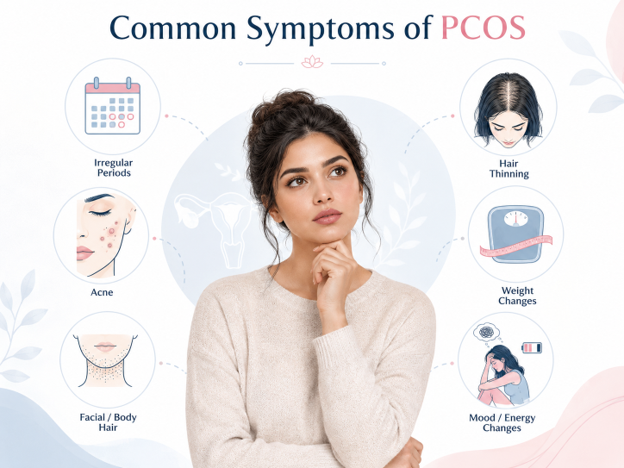
There’s no single symptom pattern that fits every case. Some women notice their cycle changing first. Others come in because of acne, facial hair, or weight that won’t shift.

Things that tend to show up:

Irregular or delayed periods
Thinning hair at the scalp
Acne or oilier skin than usual
Increased hair on the face or body
Weight gain that’s difficult to explain or manage
Cycles that are hard to predict from month to month
Trouble losing weight even with effort
Signs linked to irregular ovulation, including difficulty conceiving

Symptoms shift over time too, so if things have gotten noticeably worse or you’re seeing several of these together, it’s worth having a proper conversation with a doctor rather than guessing at what it means.

Get medical attention right away if you experience severe pelvic pain, very heavy bleeding, fainting, or anything that comes on suddenly and feels well outside your usual pattern.

Causes and Risk Factors of PCOS

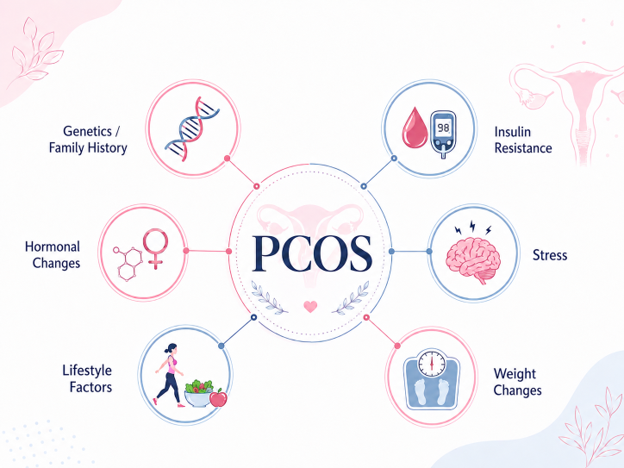
There isn’t one clean cause behind PCOS; it’s more a mix of genetics, hormones, and metabolic factors, with lifestyle playing a role too.

Family History

If PCOS or related conditions run in your family, your own risk tends to be somewhat higher.

Insulin Resistance

When your body doesn’t respond to insulin the way it should, it compensates by producing more, and that can push androgen levels up.

Hormonal Changes

Shifts in androgens and other reproductive hormones interfere with ovulation and throw off your cycle.

Lifestyle Factors

Sleep quality, how active you are, eating patterns, and ongoing stress all feed into your metabolic and hormonal health.

Weight Changes

Higher body weight can worsen insulin resistance and make symptoms harder to manage, though it’s worth noting PCOS affects women across all body sizes, not just those who are overweight.

Genetics

There does appear to be a genetic thread running through PCOS, which is part of why family history matters during assessment.

Get a Personalized PCOS Assessment

If you’re noticing symptoms that could point to PCOS, it’s worth having a proper conversation with Dr. Saba Lashkar about what’s going on.

How Does Homeopathy Help in Treating PCOS?
Depending on what’s found, care may focus on things like:
Working on symptoms like acne and unwanted hair growth
Building sustainable lifestyle and weight-management habits
Helping you better understand what’s triggering your symptoms
Supporting general well-being alongside the physical symptoms
Tracking how things change over time through follow-ups
PCOS is a long-term condition, so this isn’t usually a one-visit fix; it takes ongoing consultations to actually track progress and adjust the plan as needed.
Top-down view of hands handling yellow capsules from a small bowl beside a glass of water and a flowering plant on the table

Why Choose Dr. Saba Lashkar for PCOS Treatment?

PCOS touches a lot of areas: reproductive health, skin, metabolism, sometimes even mood — so who you choose to manage it with matters.
Z

Personalized Homeopathic Care

Z

Comprehensive Evaluation

Z

Holistic Approach

Z

Experienced Homeopathic Physician

Z

Lifestyle Guidance

Z

Compassionate and Ongoing Support

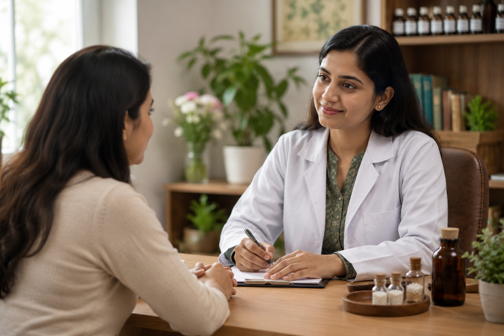
Female doctor in a white coat sits across from a patient at a wooden desk, taking notes during a consultation in a clinic setting.
Dr. Saba Lashkar’s clinic is based in Kharghar, Navi Mumbai, with online consultations available for patients who can’t make it in person.

Take the First Step Towards Better Hormonal Health

Don’t brush off changes in your cycle, skin, hair, or weight. Get things properly assessed and find out what steps make sense for you.

Frequently Asked Questions (FAQs)

Can homeopathy help with PCOS?
It can be used alongside standard care to help manage individual symptoms and support overall well-being. That said, PCOS still needs proper diagnosis and monitoring; treatment should always be based on your specific symptoms and medical needs.
What PCOS symptoms can be addressed through homeopathic care?
Things like irregular periods, acne, unwanted facial or body hair, hair thinning, and weight-related concerns are common reasons women seek this kind of care. What’s actually addressed depends on your individual case.
How long does PCOS treatment take?
There’s no set timeline. It comes down to your symptoms, how long you’ve had them, your general health, and how you respond to treatment. Regular follow-ups matter for tracking that.
Can homeopathy help with PCOS-related fertility problems?
Irregular ovulation from PCOS can make conceiving harder. If that’s your situation, it’s important to also talk to a gynecologist or fertility specialist. Homeopathy shouldn’t be a substitute for proper fertility evaluation or treatment.
When should I see a doctor immediately for PCOS symptoms?
Severe pelvic pain, very heavy bleeding, fainting, or anything sudden and out of the ordinary needs prompt medical attention, not a wait-and-see approach.
Powered by Joinchat
Call Now Button