
Homeopathy Treatment for Hair Fall in Kharghar
You keep finding hair where it shouldn’t be on your pillowcase, wrapped around the drain cover, stuck to your hairbrush in clumps that make you stop and stare at it for a second. Your part looks wider in photos taken from above. None of this happened overnight, but somewhere along the way it went from “I should probably use a better shampoo” to “something is actually wrong.”
That instinct is usually right, and the reason matters more than the symptom. A thyroid running slightly low, iron levels that dropped after a hard year, a hormonal shift, or simply genes passed down from a parent Dr. Saba, a homeopathic doctor in Kharghar, works through these possibilities with you before recommending anything, because two people with identical hair loss can need completely different treatment.
“Hair fall is rarely just about the hair. It’s usually the body pointing to something else that needs attention first.” – Dr. Saba Lashkar
Understanding Hair Fall and Its Impact on Health
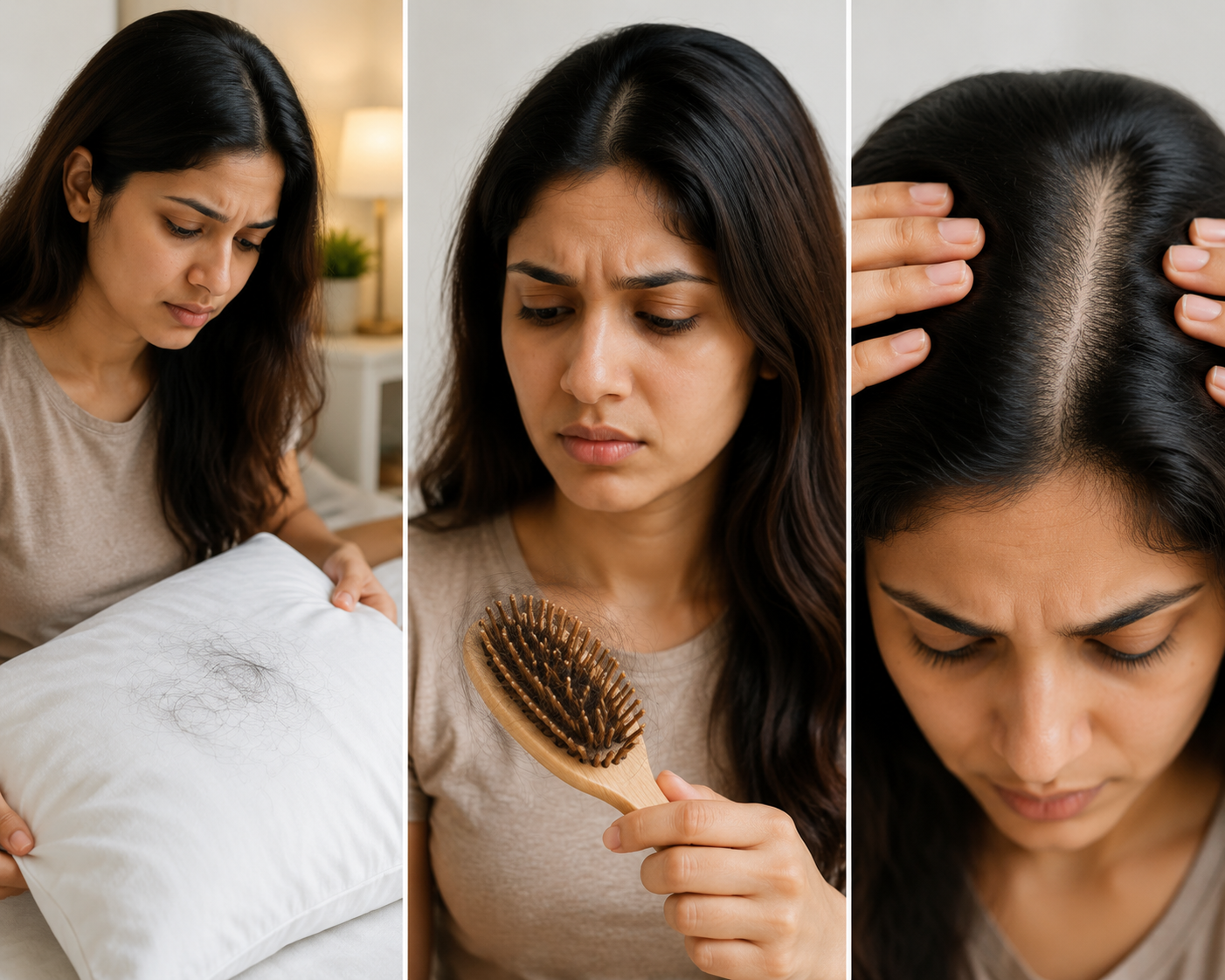
Shedding 50 to 100 hairs a day is nothing to worry about; that’s the normal turnover of the growth cycle. It’s a different story when you’re noticeably going past that, or when thinning has become visible enough that you’re changing how you part your hair to hide it.
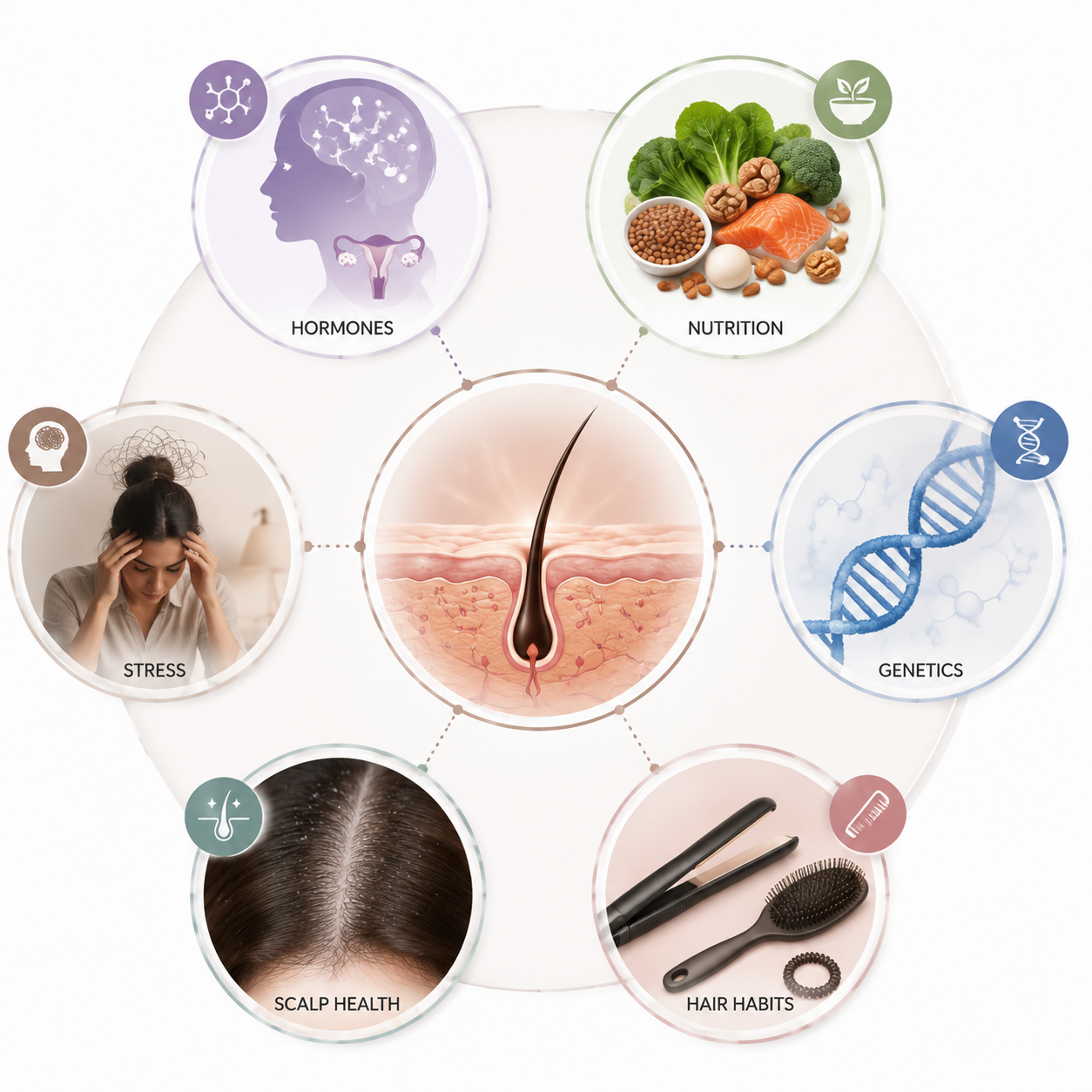
What’s usually driving it:
- Hormonal shifts – thyroid conditions, PCOS, or the months after childbirth
- Low iron, low protein, or gaps in vitamin D and B12
- Stress that’s been sitting unresolved for a while
- A genetic pattern that runs in the family
- Dandruff, scalp infections, or ongoing irritation
- Years of heat styling, coloring, or hairstyles pulled too tight
There’s a tendency to treat hair loss as a purely cosmetic issue, something you deal with quietly and don’t bring up at the doctor’s office. But it shapes real decisions: the angles you take photos from, whether you skip a haircut appointment because you’re dreading the mirror, how much mental space it occupies on a random Tuesday. That’s worth taking seriously, not managing alone with whatever’s trending online.
Noticing more shedding, thinning patches, or a receding hairline? A proper assessment can help you understand what’s actually driving it.
Common Hair and Scalp Conditions Treated with Homeopathy
Conditions that come up often:
Androgenetic Alopecia.
Telogen Effluvium.
Alopecia Areata.
Dandruff and Scalp Infections.
PCOS-Related Thinning.
Premature Greying.
What Are the Symptoms of Hair Fall?
More hair collecting on your pillow, comb, or shower floor than a few months ago
A hair part that's clearly widened
A hairline moving back
Bald patches that appeared suddenly
Strands that feel thinner, drier, or more brittle than before
Areas that just aren't filling back in
Causes and Risk Factors of Hair Fall
Family History
Hormonal Changes.
Nutritional Deficiencies.
Chronic Stress.
Scalp Health.
Hair Care Habits.
Get a Personalized Hair Fall Assessment
Find out what’s actually behind your hair fall and get a plan built around your specific case.
How Does Homeopathy Help in Treating Hair Fall?
What treatment generally works toward:
What treatment generally works toward:
Getting to the actual cause instead of managing the shedding alone
Strengthening roots so further loss slows down
Calming scalp irritation and improving overall scalp condition
Supporting regrowth as the underlying issue resolves
Bringing hormones back into balance, when that’s relevant
Improving the broader picture of health that hair often reflects
Hair takes time to grow back no version of this happens in two weeks. Expect a few follow-up visits to check progress and adjust the approach as your body responds. This isn’t a quick-fix industry claim; it’s closer to actually fixing what’s wrong.

Why Choose Dr. Saba Lashkar for Hair Fall Treatment?
Getting hair fall under control takes more than a new bottle off a shelf. It takes someone willing to look past the obvious symptom and stay involved as things shift.
Personalized Homeopathic Care
Root-Cause Evaluation
Holistic Approach
Experienced Homeopathic Physician
Lifestyle and Hair Care Guidance
Compassionate and Ongoing Support

Dr. Saba Lashkar’s clinic is based in Kharghar, Navi Mumbai, with online consultations available for patients elsewhere in India who want the same level of care without an in-person visit.
Take the First Step Towards Healthier Hair
Get a homeopathic consultation built around what’s actually causing your hair fall, not a generic recommendation.